‘It Hurts Us All’: Civil Rights Group Calls for Redskins Name Change
–
–
New Oxfam report shows the scale of global inequality is ‘simply staggering’

WhoWhatWhy.com will be ours again
On January 12, the WhoWhatWhy.com website was hijacked by a disgruntled ex–volunteer for the purpose of extorting money from us. While we re-launched quickly on WhoWhatWhy.org, the hijacker has been using our longtime and heavily trafficked .com home page to make malicious and false accusations about us.These are totally without merit and we have engaged counsel with the intent of putting a stop to the libelous accusations and to regain control of our .com location.
For those of you who have been impacted, including those who have been unable to find us over the past week, please understand that we share your frustration. We are working around the clock to get our site back.
Forty-eight hours after hosting a massive march under the banner of free expression, France opened a criminal investigation of a controversial French comedian for a Facebook post he wrote about the Charlie Hebdo attack, and then this morning, arrested him for that post on charges of “defending terrorism.”
The comedian, Dieudonné (below), previously sought elective office in France on what he called an “anti-Zionist” platform, has had his show banned by numerous government officials in cities throughout France, and has been criminally prosecuted several times before for expressing ideas banned in that country.
The apparently criminal viewpoint he posted on Facebook declared: “Tonight, as far as I’m concerned, I feel like Charlie Coulibaly.” Investigators concluded that this was intended to mock the “Je Suis Charlie” slogan and express support for the perpetrator of the Paris supermarket killings (whose last name was “Coulibaly”).
Expressing that opinion is evidently a crime in the Republic of Liberté, which prides itself on a line of 20th Century intellectuals – from Sartre and Genet to Foucault and Derrida – whose hallmark was leaving no orthodoxy or convention unmolested, no matter how sacred.
Since that glorious “free speech” march, France has reportedly opened 54 criminal cases for “condoning terrorism.” AP reported this morning that “France ordered prosecutors around the country to crack down on hate speech, anti-Semitism and glorifying terrorism.”
Continue reading
What is the Ostrich Protocol? How the EU member states play ostrich when it comes to human rights violations inside EU?
* * * *
The Treaty on the European Union, in its current format also known as the Lisbon Treaty, as well as the EU Charter of Fundamental Rights claim to establish an area of freedom, security and justice, founded on the values of respect for human dignity, freedom, democracy, equality, the rule of law and the respect for human rights[1]. That sounds perfect.
After centuries of inhuman treatment of people very often by their own governments, culminating in the tyrannies of communism and Nazism in the 20th century, EU citizens should be able to feel safe from brutal attacks and illegal operations of a violent state, if not ….If they are not refugees from another EU member state and they do not try to look for protection because they were subject in their own state to political persecution, inhuman treatment or even torture.
Continue reading

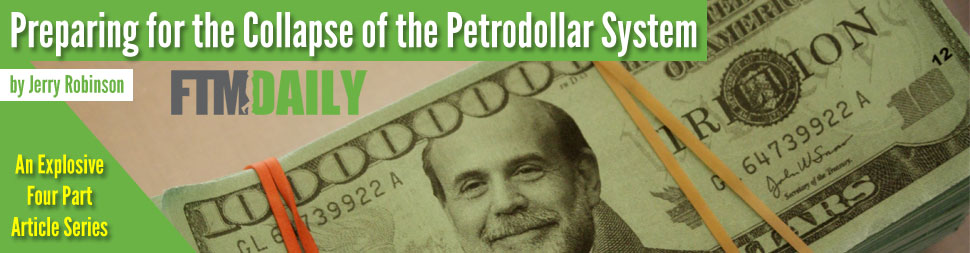
Back in November, before most grasped just how serious the collapse in crude was (and would become, as well as its massive implications), we wrote “How The Petrodollar Quietly Died, And Nobody Noticed“, because for the first time in almost two decades, energy-exporting countries would pull their “petrodollars” out of world markets in 2015.
This empirical death of Petrodollar followed years of windfalls for oil exporters such as Russia, Angola, Saudi Arabia and Nigeria. Much of that money found its way into financial markets, helping to boost asset prices and keep the cost of borrowing down, through so-called petrodollar recycling.
Continue reading
A Confederation of Falsehoods

General Park Jung Hee, with his associates, during the US CIA-coordinated military coup in 1961
In the beautiful, gilded, Staatstheater in Nuremberg, not far from the Palace of Justice where the historic Nuremberg trials were held, the last searing, soaring notes of the opera “Die Witwe des Schmetterlings (The Butterfly Widow)” ring out, seemingly suspended for an eternity.
The audience rises to its feet and explodes in applause, giving a seemingly unending number of curtain calls. There are 31 curtain calls this opening night of Feb 23rd, 1968. The conductor comes out and bows repeatedly, but the composer does not join him.
He is shivering alone in a frigid cell in a prison in South Korea, where he has been imprisoned for over a year. He has been tortured—hung from a pole, beaten with sticks, electrocuted, waterboarded—within desperate inches of his life.
In 1967, a Korean student in Berlin “confesses” to having had contact with the North Korean government to the South Korean authorities. South Korea, was, at that time, one of the poorest countries in the world—its economy cobbled together from military prostitution, remittances from soldiers fighting for the US in Vietnam, and the export of human hair for wigs.
Continue reading