I Volunteer to Kidnap Ollie North: Mike Levine


I Volunteer to Kidnap Oliver North
by Michael Levine

Undercover DEA agent Enrique “Kiki” Camarena was tortured to death slowly by professionals. Every known maximum-pain technique, from electric shocks to his testicles to white hot rods inserted in his rectum, was applied. A doctor stood by to keep him alive. The heart of the thirty-seven year old father of two boys refused to quit for more than twenty-four hours. His cries, along with the soft-spoken, calm voices of the men who were slowly and meticulously savaging his body, were tape-recorded. Kiki, one of only three hundred of us in the world (DEA agents on foreign assignment), had been kidnapped in broad daylight from in front of the U.S. Consular office in Guadalajara, Mexico by Mexican cops working for drug traffickers and, apparently, high level Mexican government people whose identities we would never know. They would be protected by people in our own government to whom Kiki’s life meant less than nothing.
Continue reading →

Posted in "Tip of the Spear" | Leave a comment

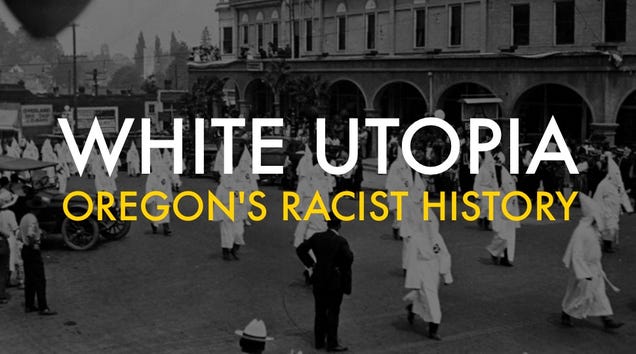
Oregon Founded as a Racist Utopia

Oregon Was Founded As a Racist Utopia


Oregon Was Founded As a Racist Utopia

Thank you for this article. I recommend also the work entitled “Sundown Towns” and its corollary web site that looks at demographics state by state that suggest the kind of history you document here. It has the ability then for anecdotal and researched details county by county, state by state. I am originally from Seattle, have lived in Houston, Texas, Chicago, IL, and now live in Madison, WI. I continue to be distressed by the myopia in this country concerning our own history and how it still carries forward into the present. But I have another query. My maternal grandfather was a Budget Director for the State of Oregon, though originally from Minnesota, and I have documented family history that he was active in opposing the deportation of Japanese citizens, as was Gov. Sprague, though they were both over-ruled by FDR. At that moment, he was mayor of the town of Ontario — and this is family anecdote with all the problematics of anecdote— and apparently went out to oppose a mob threatening a Japanese American family, leaving my grandmother terrified and weeping. All fine and well, but I am concerned not only about the truth element of this particular story, but more generally, any involvement with any Klan activities at all. I’d rather know than pretend. His name, George K. Aiken. I should add, except for Milwaukee, which is still divided but has some progress relative to its history of being “the Selma of the North” — true, see stories of Father Grappi— the state I live in now has a pretty terrible record itself of racial divide by design, and has a majority fairly unconscious of its own nature relative to this. Let’s also not forget anti-Semitism, anti-native American-ism. We had a cabin in Vilas Co WI and never displayed our identifiable last name in a place that had restaurants that had only recently removed signs: “No Jews, Indians, or dogs.” Summer a year ago a small town north of Milwaukee put up a sign on the lawn of a long-time resident who happened to be Jewish—- Leave town; and at the edge of town, a sign indicating that the town should be “cleansed” of Jews. What a country!

Continue reading →

Posted in Comparative Systems and Constitutions | Leave a comment

Human Rights and Faith: A ‘Worldwide Secular Religion’?

Human Rights and Faith: A ‘Worldwide Secular Religion’?

Post Categories: Canada
Henri Feron | Friday, February 13, 2015, 9:19 Beijing
32 views

ABSTRACT

While human rights are meant to represent a secular morality, there are surprising parallels to be drawn with religions. Perhaps most striking is the realization that human rights are actually based on faith, as was already recognized at the proclamation of the Universal Declaration of Human Rights. This dependence on faith has deep implications for the way we understand and propagate them, because it puts rights in situations of epistemological stalemate vis-à-vis other cultural, religious, or ideological moral systems. This paper proposes to compare human rights doctrine to a religion to identify potential threats to its long-term credibility, and how to address them. In particular, it explains why coercive propagation of rights risks degenerating into a form of self-contradictory fundamentalism. Ultimately, the article argues for a return to the values of tolerance and mutual respect that rights actually stand for.
Continue reading →

Posted in 4th Media, Comparative Systems and Constitutions | Leave a comment