Case Study of the Indian Government Response to Modern Slavery

CASE STUDY ON THE INDIAN GOVERNMENT RESPONSE TO MODERN SLAVERY

Post Categories: Afghanistan
Indian Government | Monday, November 3, 2014, 10:16 Beijing

SURVIVORS OF SLAVERY ARE SUPPORTED TO EXIT SLAVERY AND EMPOWERED TO BREAK THE CYCLE OF VULNERABILITY

The government hotline is known as ‘Child Line’. The hotline operates around the country in a number of different languages. It is toll-free and can be called around the country, and internationally. While it is called the ‘Child Line’, it can also be called to report tip offs of human trafficking crimes.

The mandate for victim support services sits with the Ministry of Women and Child Development. The primary scheme is the Ujjwalla programme, where money is distributed to different NGOs who provide the basic facilities for victims, including shelters, counselling and often vocational education. The Rural Ministry and the National Skill Development Mission also provide victim support schemes. The various programmes are coordinated among different ministries, and victims have the option to choose between the different schemes.

The Central Advisory Committee is under the Ministry of Women and Child Development that advises central ministries, state governments, civil societies, law enforcement agencies and autonomous organisations.

There are also victim support services for Indians exploited abroad. The Ministry of Indian Overseas Affairs deals with this issue. This ministry is also part of the specific trafficking coordination committee, however, they have an independent committee that deals with the other issues within their mandate.
Continue reading →

Posted in 4th Media, CRITICAL ISSUES OF OUR TIMES, ECONOMIC DEVELOPMENT AND SUSTAINABILITY, Indigenous Peoples and Genocida | Leave a comment

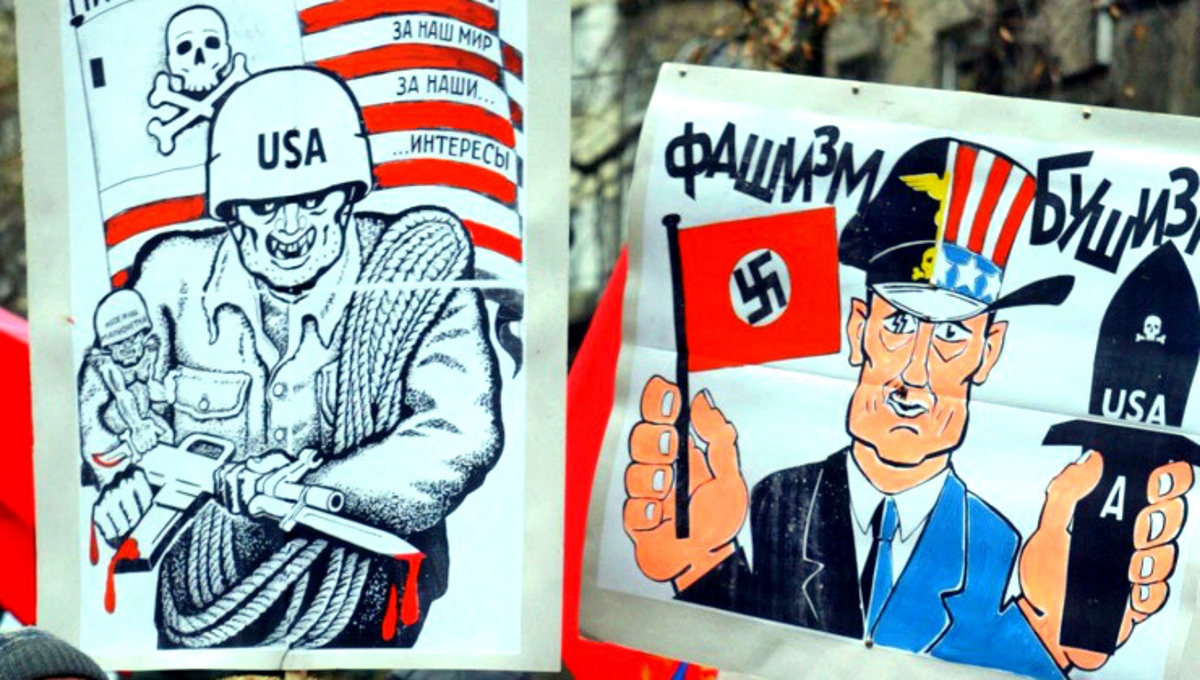
The 9/11: NATO’s Mask for Its Actual Intention to Dominate and Occupy the Whole World Militarily

The 9/11: NATO’s Mask for Its Actual Intention to Dominate and Occupy the Whole World Militarily

Post Categories: Canada
Wayne MADSEN | Friday, October 31, 2014, 16:28 Beijing

9/11: NATO’s License to Expand Globally

The 9/11 attacks on the United States undoubtedly benefited a number of actors, including the American military-intelligence complex, Israel, and most definitely, the North Atlantic Treaty Organization (NATO).

The Cold War-era, the area of responsibility for which had long been confined to Europe and North America, used the provisions of Article 5 of the NATO Charter – which states that an attack on one member is an attack on all – to extend NATO’s power deep into Eurasia, particularly in Afghanistan, Pakistan, and Kyrgyzstan.

After engaging in out-of-area invasions and occupations of Afghanistan, Iraq, Somalia, Libya, and Syria and, again in Iraq, against the «Islamic State,» the «North Atlantic» military bloc has transformed itself from a Cold War defensive alliance into a global offensive axis of nations that acts with or without United Nations authorization.

NATO has also become an instrument of neo-colonialism. Under its umbrella or the European Union, NATO established quasi-colonial governments in Bosnia-Herzegovina, Kosovo, Afghanistan, Iraq, Somalia, South Sudan, and Libya, as well as a Syrian government-in-exile in Turkey. Political advisers from NATO nations have acted as virtual viceroys, exercising veto authority over the governments installed with Western military might.
Continue reading →

Posted in 4th Media, Strategic Culture Foundation | Leave a comment

Asia Needs ASEAN-ization Not Pakistanization of Its Continent

Asia NEEDs ASEAN-ization NOT Pakistanization of Its Continent

Post Categories: Opinion > Anis H. Bajrektarevic
Anis H. Bajrektarevic | Monday, November 3, 2014, 9:05 Beijing

Why is (the Korean peninsula and East) Asia unable to capitalize (on) its successes

Speculations over the alleged bipolar world of tomorrow (the so-called G-2, China vs. the US), should not be an Asian dilemma. It is primarily a concern of the West that, after all, overheated China in the first place with its (outsourced business) investments.

Hence, despite a distortive noise about the possible future G-2 world, the central security problem of Asia remains the same: an absence of any pan-continental multilateral setting on the world’s largest continent. The Korean peninsula like no other Asian theater pays a huge prize because of it.
Continue reading →

Posted in 4th Media | Leave a comment