
The Rage of the Cultural Elites
A certain unhappy incident happened to my aunt in the summer of 1966. The Cultural Revolution—a political movement initiated by Mao Zedong—was beginning to engulf the country. That same year many American college students were protesting against the Vietnam War and Leonid Brezhnev was keeping his seat warm as the General Secretary of CPSU, having replaced the somewhat volatile Nikita Khrushchev two years earlier. My aunt was then a freshman studying literature at Fudan University in Shanghai.
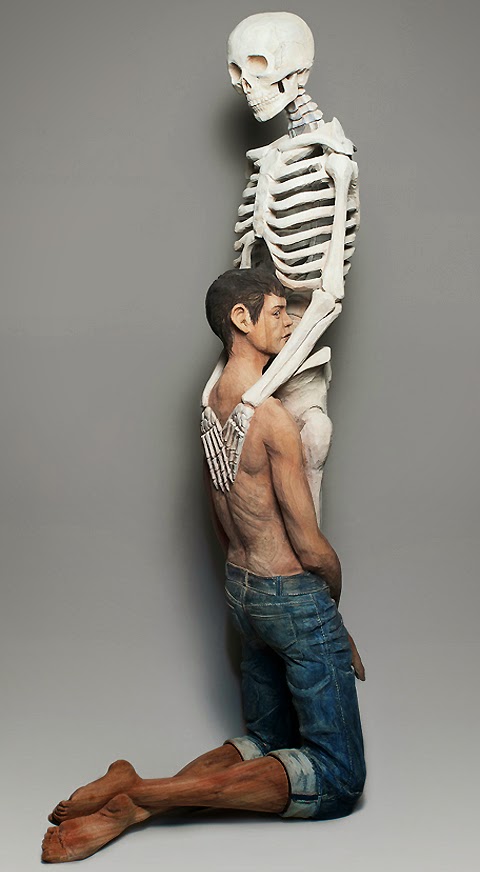 |
| Yoshitoshi Kanemaki |
It so happened that my aunt, then a sensitive and somewhat dreamy young woman, had stubbornly and haplessly clung to certain musical tastes which at that time in China came to be regarded as politically incorrect, being said, in the trendy ideological jargon of that time, to reflect “decadent bourgeois revisionist aesthetics.” To wit, my aunt had kept in her record collection a rendition of “The Urals Mountain-Ash” (Уральская Рябинушка), a Russian folk song in which a young girl meets two nice boys under a mountain-ash tree and must choose between them, performed by the National Choir of the Ukrainian Soviet Socialist Republic. It was an old-style LP spinning at 78 RPM. It had a red emblem in the middle emblazoned with “CCCP.”
One of my aunt’s roommates, who probably had always resented her for one reason or another, found out about it and reported her to the authorities. For this rather serious infraction, student members of the Red Guard made my aunt publicly smash her beloved record, then kneel upon the fragments and recite an apology to Chairman Mao while fellow-students threw trash at her face shouting “Down with Soviet revisionists!” This generation of Chinese young people, who once donned Red Guard uniforms, beat people up around the country and smashed various cultural artifacts, is now mostly living on government pensions or earning meagre profits from home businesses, but some have prospered and can be found among the upper crust of contemporary China’s business, cultural, and political elites.
This episode came to my mind when in the summer of 2014 I came upon video clips of Ukrainian student activists storming university classrooms in mid-lecture and ordering everyone to stand up and sing the Ukrainian national anthem, then forcing the professor to apologize for the lecture not being adequately patriotic. There were also ghastly spectacles of “Enemies of the People” (guilty only of having served under the overthrown president Yanukovich) being paraded around in trash bins. In Ukrainian schools, children were made to jump up and down, and told that “Whoever doesn’t jump is a Moscal” (a derogatory term for “Russian”).
Continue reading


